- Economic Repercussions: Liberating Liquidity
- Preventing Supply Chain Collapse
- The Legal Framework: Compliance as a Prerequisite
- Adapting Commercial Contracts: Force Majeure vs. Hardship
- Foundational Restructuring: Federal Decree-Law No. 20 of 2025
- Crisis Management with Crimson Legal
- Frequently Asked Questions
- References
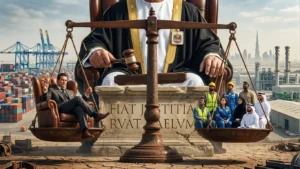
Actual distribution has begun. Pumping one billion dirhams into Dubai’s economy is a decisive action to course-correct the markets. This temporary package is not a free grant. It is a strict financial engineering tool designed to absorb operational shocks. Understanding its economic mechanisms and legal conditions determines the absolute difference between corporate recovery and rapid insolvency.
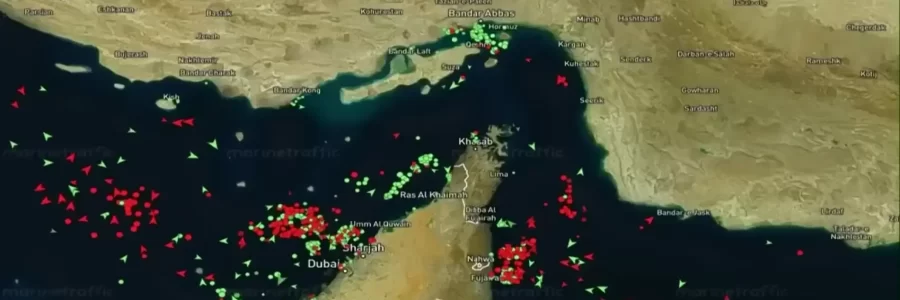
The global economy faces unprecedented bottlenecks. The Strait of Hormuz crisis exerts immense, compounding pressure on global maritime trade. Documented economic estimates indicate closing this vital waterway cost GCC economies between $18 billion and $20 billion in direct oil and gas revenues in a mere 26 days. A continuous financial bleed of $745 million daily persists in the energy sector alone. Escalate the skyrocketing maritime shipping costs, heavy insurance premiums, and systemic supply chain disruptions. The daily economic cost easily breaches the $1 billion mark. Import-export businesses now operate in a fiercely complex, hostile commercial environment.
H.H. Sheikh Hamdan bin Mohammed bin Rashid Al Maktoum approved the 1 billion AED economic support package against this backdrop. Effective 1 April 2026 for a duration of three to six months, this represents a proactive manoeuvre to protect the emirate’s economic momentum. Dubai’s gross domestic product registered a 5.4% growth in 2025, exceeding 937 billion dirhams, driven by a 6.4% jump in the final quarter. The leadership understands strong economies demand structural agility. Smart state intervention prevents transitory liquidity crises from mutating into systemic, market-wide corporate insolvencies.
Economic Repercussions: Liberating Liquidity and Protecting Markets
The impact of the one billion dirham package transcends direct financial subsidies. It operates as a precise mechanism to redirect cash flows within Dubai’s business ecosystem. This financial engineering relies on three parallel axes targeting daily commercial operations.
Neutralising Cash Flow Bottlenecks
Commercial entities, specifically small and medium-sized enterprises (SMEs), burn cash at an alarming velocity during geopolitical crises. They struggle to service fixed operational costs amidst plummeting top-line revenues. The stimulus package suspends a wide array of government fees and drastically reduces utility bills. It liberates immediate cash liquidity. These funds do not vanish. They are forcefully redirected to sustain critical operations, pay tier-one suppliers, and retain top talent, rather than draining vital cash reserves on regulatory compliance fees.
- Dubai Municipality: Suspension of the 10% municipality fee on hotel sales, housing fees for labour accommodation, and public cleanliness fees for three months. This generates an immediate reduction in fixed overheads tied to basic infrastructure.
- Department of Economy and Tourism: Deferment of local fees on commercial licences, advertising permits, and licence amendments for three months. This minimises foundational compliance burdens, ensuring the commercial licences of temporarily distressed firms remain active.
- Tourism Sector: Complete suspension of the Tourism Dirham fee collection. Hotels retain cash internally to cover urgent operational expenses while aviation and tourism volumes fluctuate due to regional conflicts.
Preventing Supply Chain Collapse and Activating Virtual Customs
Interconnected economies mean one corporate insolvency shatters entire supplier networks. Delaying goods via the Strait of Hormuz is devastating for physical inventory management. Customs declaration grace periods are now extended from 30 to 90 days. A further six-month extension is actively available for critical import and export sectors. This breaks the destructive domino effect threatening the retail and logistics services sectors. Merchants gain a highly extended cash conversion cycle. They secure the breathing room to sell landed goods and generate actual revenue long before statutory customs duties become payable.
The Executive Council structurally supported this mechanism by approving the “Virtual Warehouses” initiative, supervised directly by Dubai Customs. Legally, this introduces a robust regulation for a “Temporary Admission Declaration”. It legally suspends customs duties and financial guarantees. This framework succeeded previously in high-value sectors via the “Art Flow” initiative, suspending duties for three years and removing geographical limits on temporary imports. Concurrently, phase one of “Digital MAKASA” accelerates direct import procedures digitally, bypassing physical service centres and fortifying the agility of inward goods flow.
“Insolvency is rarely an overnight event; it is the culmination of ignored legal mechanisms and mismanaged cash flow during exogenous shocks. Proactive contract adaptation is mandatory.” – Bianca Gracias
Stabilising Purchasing Power
Slashing operational costs blocks companies from choosing the easiest, most economically destructive solution: mass redundancies. Retaining jobs and stabilising payrolls guarantees stable local consumption metrics. This shields secondary sectors like real estate and retail from descending into a localised recession. The government reinforced this by simplifying the issuance and renewal of residency permits, locking global talent within the emirate’s borders.
The Legal Framework: Compliance as a Prerequisite
Stimulus funds will not bail out random entities or those burdened with pre-existing structural failures. Securing these state-backed facilities demands a robust legal and tax infrastructure proving ongoing operational viability.
Eligibility and Institutional Transparency
Accessing government support strictly requires clear, documented legal evidence of commercial detriment. Corporate financial records must be thoroughly audited and completely free from material breaches. Current UAE taxation legislation explicitly conditions customs grace period extensions on absolute tax compliance. Companies embroiled in tax evasion disputes, or those non-compliant with Federal Tax Authority regulations under the new Executive Regulations of the Tax Procedures Law effective April 2026, face immediate exclusion from the protection umbrella.
Adapting Commercial Contracts: Force Majeure vs. Hardship
The stimulus grants companies a rigid 3 to 6-month legal breathing space. Do not waste this window. Utilise it immediately to redraft commercial leases, defer major supplier payables, and restructure corporate debt via notarised legal addenda. Avoid the crippling costs of prolonged civil litigation.
This contractual adaptation relies heavily on the UAE Civil Transactions Law (Federal Law No. 5 of 1985). Executives must understand the critical distinction between “Force Majeure” and “Exceptional Circumstances”. Article 273 states that if a force majeure event makes contractual performance absolutely “impossible”, the obligation extinguishes, and the contract automatically rescinds. Proving force majeure demands an exceptionally high legal threshold. The event must be entirely unforeseeable at the contract’s inception, and the consequences unavoidable despite executing all reasonable mitigation measures. Mere financial hardship or skyrocketing shipping costs caused by the strait closure never constitutes “impossibility”.
Article 249 offers a vastly more flexible haven: the principle of “Exceptional Circumstances” or economic hardship. If unforeseeable, public exceptional events render the performance of an obligation severely “oppressive”—threatening grave financial loss, though not strictly impossible—a judge or arbitral tribunal possesses the authority to reduce the oppressive obligation to a reasonable level. Astute application of these specific provisions during the stimulus period forces counter-parties to the negotiating table, enabling debt restructuring and averting total liquidation.
New Insolvency Barriers and Shifting Judicial Perspectives
Government support availability fundamentally alters the judicial perspective on corporate distress. Commercial courts now rigorously scrutinise whether a distressed company exhausted attempts to utilise the 1 billion dirham stimulus before filing for restructuring or liquidation under the UAE Bankruptcy Law. A corporate entity rushing to declare bankruptcy without concrete evidence of attempting contract adaptation, applying for fee deferrals, or leveraging banking relief programmes will be deemed grossly negligent. Failing to mitigate damages severely prejudices the company’s legal standing against aggressive creditors.
Foundational Restructuring: Federal Decree-Law No. 20 of 2025
To guarantee sustainable commercial recovery post-Hormuz shock, these short-term liquidity solutions must align with the fundamental structural amendments introduced by Federal Decree-Law No. 20 of 2025 on the Commercial Companies Law. This legislation injects massive structural flexibility for entities operating within the State. Key mechanisms include:
- Re-Domiciliation: Companies can legally transfer registration between varying licensing jurisdictions (from mainland to a free zone, or vice versa) without executing a costly liquidation process. This slashes operational overheads while preserving the corporate personality and crucial credit history.
- Private Placement for PrJSCs: Private Joint Stock Companies gain the ability to raise rapid capital via private placements regulated by the Securities and Commodities Authority. This delivers a much faster, cheaper alternative to an Initial Public Offering (IPO) for injecting emergency liquidity.
- Dispute Resolution and Governance: Licensing authorities possess the statutory right to appoint independent managers for one year if shareholders reach a hostile deadlock. This terminates administrative paralysis during acute crisis periods.
- Multiple Share Classes and In-Kind Contributions: Issuing distinct share classes with varying rights simplifies the valuation of in-kind contributions. Distressed companies can aggressively convert supplier debt into equity without the original founders forfeiting absolute operational control.
The amendments enforce Drag-along and Tag-along rights, and embed rigorous Succession Planning mechanisms to ensure corporate continuity following sudden death or abrupt shareholder exit. A specialised framework for Non-Profit Companies reinvesting profits was also ratified.
Crisis Management with Crimson Legal
In this volatile environment, merely reading the law is insufficient. Executives must strategically weaponise legal frameworks to rescue commercial entities. Crimson Legal, a premier consultancy headquartered in the Abu Dhabi Global Market (ADGM), models this highly specialised structural engineering.
The firm’s legal team, partnering with formidable legal minds who possess over two decades of regional experience, operates strictly on commercial “common sense” and executes a “negotiate, not spar” mandate. The firm remains sector agnostic, targeting holistic support for founders and entrepreneurs throughout the entire corporate lifecycle.
Their crisis survival mechanisms deploy across five distinct pillars:
- Structuring: Going beyond securing cheap trade licences to architecting resilient corporate structures. They lead complex re-domiciliation operations under the 2025 law, shifting distressed companies to low-cost environments without liquidation.
- Operating: Drafting airtight bilateral commercial contracts in dual languages. They provide rapid counsel on triggering Article 249 (Exceptional Circumstances) to draft addenda that shield clients from supplier penalty clauses and arbitrary delays.
- Growing: Managing high-stakes M&A and enforcing Drag/Tag along rights. They ensure distressed companies secure emergency capital injections while founders retain absolute administrative dominance.
- Financing & Hiring: Structuring stringent employment contracts tailored for economic downturns. They prevent arbitrary dismissals that trigger devastating labour disputes in the courts.
- Protecting: Acting as a pre-emptive blast wall against financial default risks. They execute aggressive mediation to dismantle shareholder deadlocks based on the latest legislative frameworks.
Frequently Asked Questions
- Can my company claim Force Majeure solely due to the shipping delays in the Strait of Hormuz?
- No. Shipping delays and increased costs constitute financial hardship, not absolute impossibility. You must rely on the principle of Exceptional Circumstances (Article 249) to renegotiate terms rather than claiming Force Majeure (Article 273) to terminate the contract.
- Are the Dubai government fee deferrals automatically applied to all businesses?
- No. Accessing the stimulus package requires proactive application and strict proof of tax compliance and commercial detriment. Companies with existing Federal Tax Authority violations are excluded.
- How does Re-Domiciliation help a company facing bankruptcy?
- Re-Domiciliation allows a company to move its legal registration to a cheaper licensing jurisdiction (e.g., from mainland to a specific free zone) to drastically cut fixed overheads, without losing its corporate bank accounts, credit history, or operating history.
References
Disclaimer: This content is for informational purposes only and does not constitute certified legal or financial advice. Laws and regulations apply subject to legislative updates. Consult a licensed legal counsel to evaluate your corporate status.

Bianca Gracias is a legal professional and contributor at Crimson Legal
, where she shares insights on corporate, commercial, and regulatory matters affecting businesses in the UAE. Her writing focuses on delivering practical legal guidance for entrepreneurs, startups, and growing companies, helping readers better understand the evolving business and compliance landscape.