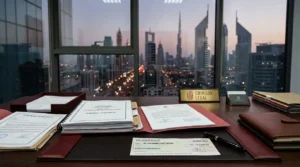
Commercial and labour disputes are among the most frequently litigated types of cases in UAE courts, involving a variety of conflicts that may arise between companies or between companies and their employees. Whether you are an employer or an employee, understanding how to litigate these cases is crucial to protecting your rights and ensuring justice.
At Crimson Legal, we provide comprehensive legal consultations to help you navigate complex legal procedures and achieve the best outcomes in commercial and labour disputes. Through our website, https://www.crimson-legal.com/services/, you can learn about our diverse services, which cover all stages of the business life cycle.
Commercial Disputes in the UAE
Commercial disputes in the UAE include a wide range of conflicts that may arise between businesses or between individuals and companies. Some of the most common types of commercial disputes handled by UAE courts include:
- Disputes relating to commercial contracts: These cases address issues arising from breaches of, or failures to fulfil, contractual obligations between the parties involved.
- Intellectual property disputes: These cases deal with intellectual property rights such as patents, trade marks and copyrights.
- Commercial debts: This includes cases relating to unpaid invoices, collection orders and financial claims between companies.
- Commercial arbitration: In many cases, arbitration is used as a method of resolving commercial disputes instead of litigation in the courts. Arbitration offers quicker and more flexible solutions.
Litigation Procedures in Commercial Disputes
- Amicable negotiation: Initially, the parties may attempt to negotiate to resolve the dispute outside court.
- Mediation: External mediation may be used to resolve the dispute through a neutral party.
- Filing a claim: If alternative solutions fail, the case may be filed before the competent commercial court.
- Court judgment: After the evidence has been presented, the court will issue a judgment, which may be appealed if there are legal grounds for doing so.
Labour Disputes in the UAE
Labour disputes involve conflicts between workers and employers and may include issues relating to wages, working conditions, compensation and termination procedures. These disputes are particularly important in the UAE due to the large number of foreign workers in the local labour market.
Common Types of Labour Disputes
- Salary and wage disputes: These involve claims for unpaid wages or disputes relating to allowances and bonuses.
- Overtime: This includes disputes about overtime hours due and workers’ rights in respect of those hours.
- Compensation and benefits: These disputes involve workers’ rights to compensation upon termination or issues regarding end-of-service benefits.
- Unlawful dismissal: This type of case addresses situations in which workers are dismissed illegally or without just cause.
Litigation Procedures in Labour Disputes
- Filing a complaint with the competent ministry: Labour disputes are often first submitted to the Ministry of Human Resources and Emiratisation.
- Negotiation with the employer: In some cases, direct negotiations with the employer may take place in order to reach an amicable resolution.
- Going to court: If the parties cannot reach an agreement, the case is escalated to the relevant labour court.
- Court judgment: Ultimately, the court issues a final judgment after hearing both parties, and either party may appeal the judgment if necessary.
How to File a Claim in Commercial and Labour Disputes
- Documentation and preparation: Whether you are involved in a commercial or labour dispute, it is crucial to keep all documents and evidence supporting your case. This includes signed contracts, correspondence, invoices and any financial documents or communications between the parties involved.
- Choosing the right court: In the UAE, it is important to know which court has jurisdiction over your case, whether it is a commercial court or a labour court. The appropriate court depends on the type of case and the nature of the dispute.
- Filing the claim: The claim is filed with the competent court, accompanied by the required fees. A hearing date will then be set.
- Court hearings: During the hearings, both parties will present their evidence and testimonies, and the court will issue a judgment on the case.
- Appealing the judgment: If you are dissatisfied with the court’s decision, you may appeal the judgment if there are legal grounds for doing so.
The Importance of Legal Consultation in Commercial and Labour Disputes
In both commercial and labour disputes, legal proceedings require in-depth knowledge of UAE law, as well as a strong understanding of court processes. It is essential to consult a specialised lawyer to ensure that your rights are protected and that your case is presented correctly in accordance with the law. The lawyers at Crimson Legal have the expertise and ability to provide appropriate legal advice on how to handle commercial and labour disputes and achieve the best outcomes for our clients.
Why Crimson Legal?
Crimson Legal is a smart legal consultancy based in the United Arab Emirates, focusing on providing clear legal advice based on applicable laws and with an approach derived from common sense. The firm’s focus is on supporting its clients’ businesses, enabling compliance and reducing legal risks so that their businesses can thrive and become successful.
Areas of Services
The firm offers a comprehensive range of legal services designed to meet the needs of companies at various stages of growth, in accordance with what is published on its website https://www.crimson-legal.com/services/:
- Structuring: Establishing a sustainable and scalable structure.
- Operating: Investing, financing and liquidating responsibly.
- Growing: Creating, collaborating and partnering in business.
- Financing: Effectively retaining and managing employees.
- Hiring: Expanding your business profitably.
- Protecting: Protecting the businesses you create.
Team
The firm is led by Bianca Gracias, Managing Partner, a lawyer with over 18 years’ experience advising business owners at all stages of development and helping them overcome legal challenges in the UAE. She co-founded Crimson Legal as a unique consultancy where she acts as a key partner in advising entrepreneurs at every stage of growth. The firm also includes Ahmed Al Khalil, a lawyer with over 20 years’ experience in corporate law, mergers and acquisitions (M&A), litigation and regulatory matters in the GCC and the Levant, and he currently works as a partner at Crimson Legal.
Legal Tips When Going to Court
- Gather sufficient evidence: Make sure you have all the evidence and documents that support your case.
- Understand your legal rights and obligations: Ensure that you are fully aware of the laws governing your case.
- Consult a specialised lawyer: Having a specialised lawyer significantly improves your chances of obtaining a fair judgment.
Commercial and labour disputes present a legal challenge that requires a deep understanding of UAE laws and litigation procedures. Through Crimson Legal, we are here to help you understand these laws and guide you through the necessary legal processes to protect your rights and resolve disputes effectively. For more information about our services, you can visit our website: https://www.crimson-legal.com/services/.
If you need legal consultation or assistance in filing a commercial or labour claim, do not hesitate to contact us. Our specialised team at Crimson Legal is always ready to provide the legal support you need

a common law qualified Associate at Crimson Legal with over three years of experience advising on cross-border commercial matters. She specialises in structuring and negotiating complex transactions across multiple jurisdictions, with a focus on cross border commercial contracts and joint ventures. She regularly supports SMEs, startups and growth-stage companies, helping them navigate legal risks while scaling across borders. She has in-depth knowledge of the legal and regulatory frameworks across various free zones and mainland jurisdictions in Dubai and the wider UAE, including DDA, DMCC, DIFC, and ADGM. She has drafted and negotiated complex cross-border transactional documents, including multi-party joint venture agreements, international distribution frameworks and technology transfer arrangements, often involving stakeholders across the GCC, UK and Asia.